
In the Garden at Hospitalfield
As an illustrator I've had the privilege of working on some really fascinating projects that have taught me unexpected lessons about the world, about illustration and if it's not too deep, about me. (Actually that does feel too deep, forget I said that). I'd like to use this blog, this peaceful space away from the din of social media, to share a bit more about some of these projects.
The first project is about a place that has been pivotal to my career as an illustrator, Hospitalfield. A gothic mansion and garden on the outskirts of Arbroath, in 2026, this historic site received the Carlo Scarpa Award and was the subject of a documentary film and a beautiful book.

I was invited to contribute an essay about my time at Hospitalfield. Here it is.
The Free Drawing School
My relationship with Hospitalfield began in 2019 when I was invited to lead the Free Drawing School. In my application for this yearlong residency, I had said that I wanted to get to know the place intimately by ‘drawing everything’.
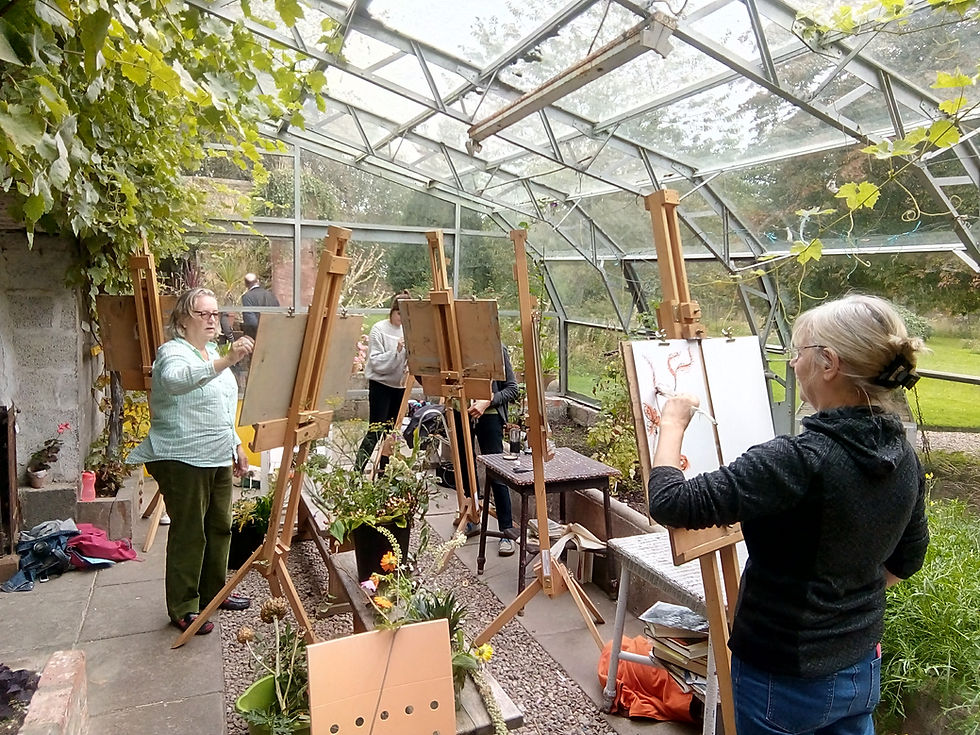
For the Free Drawing School, I designed workshops exploring different elements of the garden – its changing functions throughout time. In my attempt to understand the history, I spoke with people who worked and volunteered at Hospitalfield; archivists, curators, gardeners, tour guides. Each had a different enthusiasm or area of expertise, and I was introduced to topics including medicinal plants and monastic gardens, plant hunters and garden design, family scandals and famous visitors. Everything was new to me, and every question I asked led to twenty more.
As my desk piled ever higher with scribbled notes and borrowed books, I tentatively asked if there was a resource that held all this information in one place – a concise history of Hospitalfield’s garden.
There was not. Oh dear.
Drawn in to the past
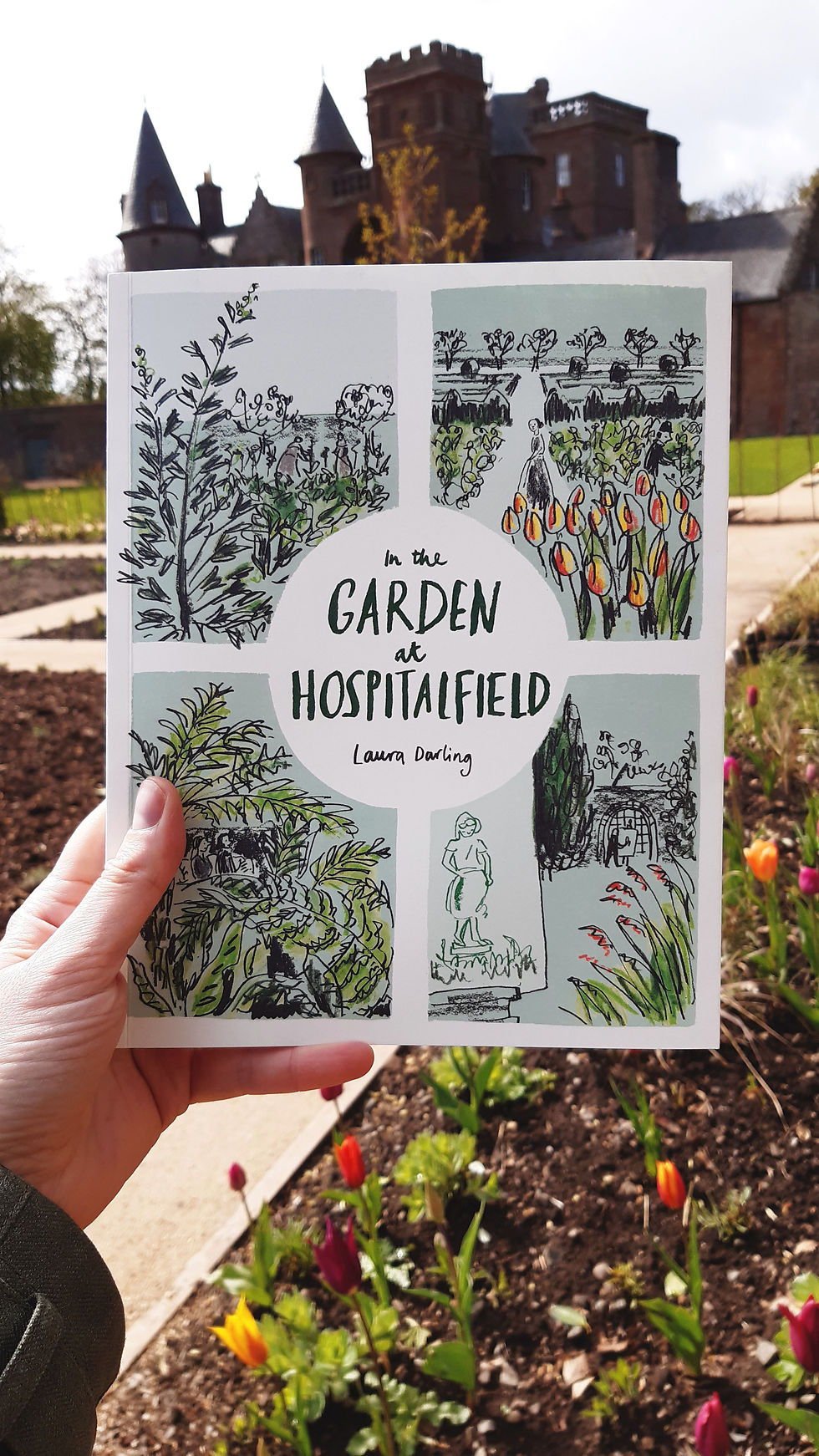
On a damp day in November 2019, I quietly announced that I intended to make a graphic novel about the history of the garden. To my delight and relief, Director Lucy Byatt said that Hospitalfield would support me in this quest and fund the publication. This vote of confidence gave me focus and much-needed accountability. It also helped that Lucy fully understood the ambitiousness of the project.
With many challenges to overcome, the one that made me most nervous was the lack of visual reference material. I am at my happiest when drawing from observation, but for most of the garden’s 800 years, there was no way of knowing what it, the house, or the people who lived there, looked like. What did monks eat in the 13th century? How did children dress in the 1530s? My internet search history grew ever more bizarre.
As I hacked my way through constantly growing brambles of information, I slowly began to understand the story, using the characters as my guides. Through drawing, I got to know these people; the Grey monks, pilgrims, Elizabeth Allan-Fraser; their personalities revealed themselves through facial expressions and gestures, clothing and hobbies. They felt real to me, almost like friends. Little did I know how much I would soon come to value their company.
Drawing parallels
In January 2020, the UK went into lockdown. Gathering up my books and drawings, I left the Free Drawing School, trudging across the garden’s former lawn - currently an expanse of mud - renovation work having promptly halted. For the rest of the year, I worked at home, alone in my studio, and Hospitalfield’s function as a quarantine centre took on an eery significance. With museums and galleries closed, the pandemic led to a loss of income and opportunities for me but also allowed me to become completely absorbed into creating In the Garden at Hospitalfield.
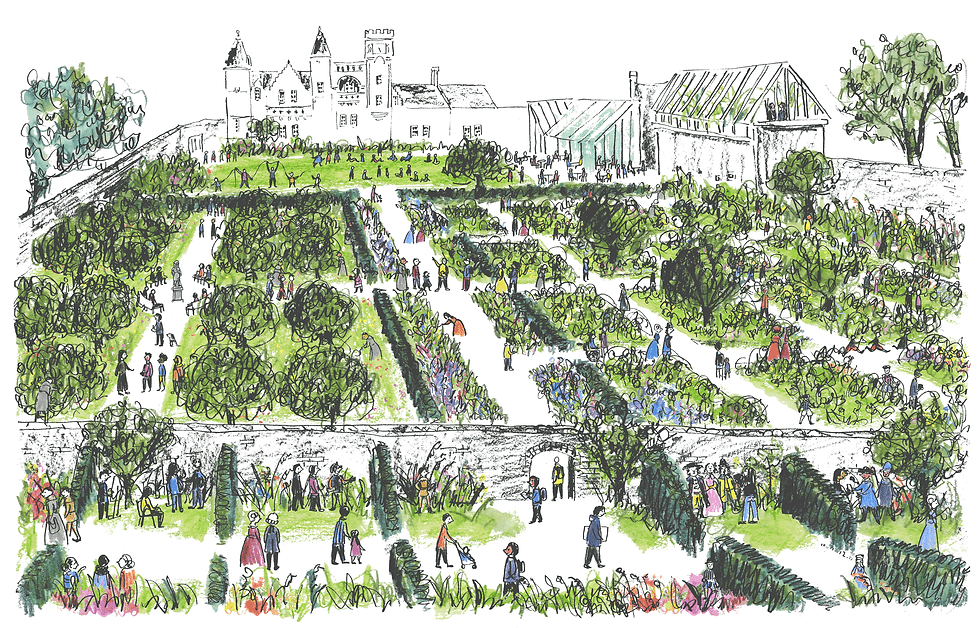
With the garden at its heart, I organised the book into five chapters that illustrate the evolution of Hospitalfield from medieval hospital to family home, its Victorian transformation, life as an art school and its ongoing development as a centre for artists. Different characters show us how they used the garden – for food, medicine, as a status symbol or for leisure. We learn about the characters through the garden and vice versa. The final illustration, in which we see characters from throughout the book in the new garden, is a celebration of the past, present and future. I drew it before the new garden was created, and when I finally visited in real life, it felt like stepping into a drawing. I almost expected to see Elizabeth Allan-Fraser out with her plant-collecting bag. While my initial goal of ‘drawing everything’ was technically impossible, in that moment, I felt I came pretty close.
You can view more images from In the Garden at Hospitalfield, and order a copy here.
And you can buy Hospitalfield: a place dedicated to art, here.
Comments